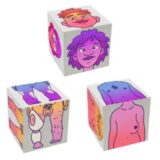
Now have a look at people’s skin. The bodies on the dice have different skin tones, because people come in many different colours. That is easy to see – but what does it mean? Sometimes people believe that skin colour shows what kind of person someone is. That idea can lead to unfair treatment. Long ago, and even today, especially White people have learned to think this way without realising it. That’s why talking about it is important.
When you play, you don’t need to match the heads, upper and lower bodies by colour. Instead, you can think about questions like these: What is your skin colour and what are the skin colours of your friends and family? What skin colours do people have in your favourite books or movies? Who do you often see, and who is missing? Has any of them ever been the target of a racist comment? How would you feel in that person’s place? And what could a friend do to show support? Do people with different skin, hair or eyes than most of ours belong here, too?
Beyond varieties in skin colours and hair, some people have light patches on their skin, which are known as vitiligo. Like moles, freckles, or birthmarks, vitiligo is just another form of uneven skin colouring. Many people wear it with pride, but sometimes the stares or questions of others can make people with vitiligo feel uncomfortable. The same can happen to people with burns or scars.
Because it can be pretty or meaningful, there are even people who modify their skin on purpose. For example, one of the torsos on the dice has a tattoo. Do you know anyone with a tattoo? What might it mean to them?
Now take a look at the hair on the chests, genitals and legs. Body hair naturally varies in amount, but it can also be removed or added artificially. Why might someone want to add or remove their body hair?